Highlights | Mihokan, a Long-Established Ryokan in Mihonoseki, Shimane

National Registered Tangible Cultural Property: Mihokan Main Building

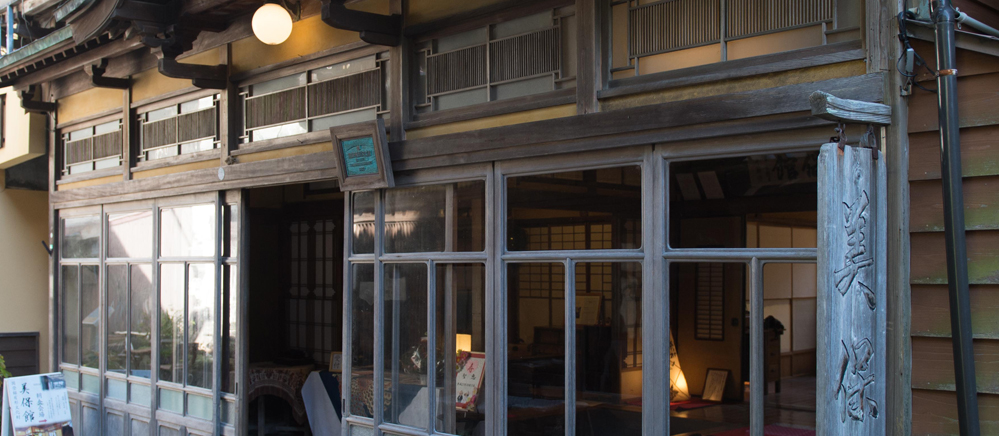
Mihokan Main Building image 1
The Mihokan Main Building was built in 1905 (Meiji 38) and is nearly 120 years old.
It was the first operating ryokan in Shimane Prefecture to be registered as a National Registered Tangible Cultural Property.
Its stately, intricate architecture and bold composition draw you into a timeless world.
Today it serves as the breakfast venue for all our overnight guests.
It is also used for wedding receptions, banquets for various gatherings, and as a stage for concerts and many other events.

A History Woven Since the Heian Period

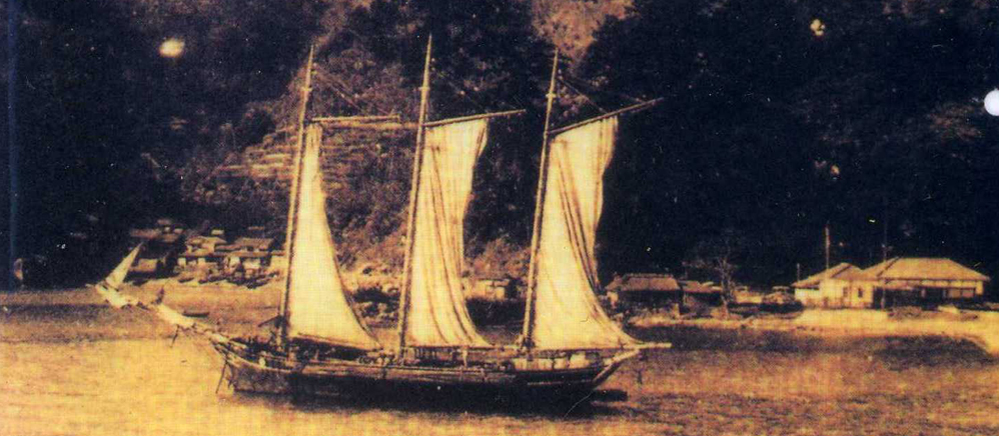
110 years of tradition and history image 1
Since ancient times, Mihonoseki has thrived as a key hub of sea transport and a harbor where ships waited for favorable winds. It served as a whaling base and as the San'in region's center for trade across the Sea of Japan with the Korean Peninsula and beyond, and as an export port for iron made by tatara ironmaking. In the Ashikaga era it even became land under the direct control of the shogunate, and from the Edo period it prospered as an important port for Kitamaebune merchant ships. Mihokan's origins go back to the Genpei War. Its roots are said to lie with Matsuda Juro Fujiwara Sadahide, one of the Minamoto generals from the east, who was defeated at the Battle of Ishibashiyama, made his way to Mihonoseki, and settled there. The surviving family death register lists him as the founder; from the second generation on, the family took Sadahide as its surname and for generations ran a shipping merchant house and trading business in Mihonoseki.

In the Muromachi period, the family oversaw commerce in Mihonoseki in the Japan-Korea trade, served for generations as village headmen and elders, and used the trade name "Azuma." That site remains today as "Kotokan," the birthplace of the Sadahide family.

In the Edo period, Mihonoseki bustled with Kitamaebune ships calling from thirty-three provinces. Among the merchants, "Azuma" monopolized trade with the seven northern provinces (Dewa, Sado, Echigo, Etchu, Kaga, Noto, and Echizen), which boasted the largest trade volume in the shipping industry, as well as the Goto ships of Yonago and the Shinji ships of Matsue, and changed its trade name to "Kitaguniya." (The Kotokan site is the former grounds of Kitaguniya, where whaling tools and a natural cave used to store goods still remain.)

From the Genroku to the Hoei eras (early 17th century), Sadahide Ichiroemon, the 18th head of Kitaguniya, also made his residence in what is now the north wing of the Main Building and ran a business under the trade name "Izumiya (Izumi-ya)," dealing mainly with shipping merchants from the Senshu region. Izumiya (Izumi-ya) was named among the investors when the exchange office was established, and was a merchant house closely tied to the Matsue Domain. Through Kitaguniya and Izumiya, the family controlled trade between the seven northern provinces and Kansai, "the nation's kitchen," becoming a merchant house that oversaw a shipping merchant business, inns, and many other shops. Around this time, Mihonoseki once again flourished as one of western Japan's leading entertainment towns.

The opening of the San'in region's first railway (Meiji 35) changed the flow of goods completely. Sensing the limits of Mihonoseki's role as a sea transport hub, the Sadahide family built Mihokan, Mihonoseki's first full-scale ryokan, in Meiji 38 and opened for business. This is today's Mihokan Main Building. It has operated as a ryokan ever since, was registered as a National Registered Tangible Cultural Property in 2004, and has served as a venue for banquets, wedding receptions, and a wide range of events.

In the early Showa period, a second Mihokan building was built on the mountain side of Aoishi-datami Street (the site where Izumiya (Izumi-ya) once stood). It too long operated as a ryokan and was registered as a National Registered Tangible Cultural Property at the same time as the Main Building. Today it welcomes guests as Izumiya Villa, an exclusive-use inn for one group at a time.

Both buildings offer a glimpse of the advanced skill and playful spirit of the carpenters and joiners of the day.

Since opening, Mihokan has hosted members of the Imperial Family and many writers and artists, who left behind traces of their stays as well as calligraphy, paintings, and other works.

From 2019, we renovated four traditional Japanese houses (kominka) that we own, one after another. At Izumiya Villa, a National Registered Tangible Cultural Property, we added a semi-open-air bath overlooking the garden, and we opened Tsukina Rikyu Villa, a secluded exclusive-use retreat; Taisho-kan Zakuro Villa, an exclusive-use inn overlooking Miho Bay; and Kamimura, a converted boatmen's inn in the fishing town. Since then we have continued to make improvements, such as adding hinoki cypress baths and redesigning the gardens. Guests of every property, including the New Wing and the villas, enjoy breakfast in the Main Building.

We have also opened a kominka bar inside the Main Building, and in the Kazegaura district, surrounded by the sea on three sides,Mihonoseki Campsite. We are creating an environment where you can enjoy Mihonoseki in many different ways.

Carefully discerning what to preserve and what to change, we will continue to strive every day to bring our guests heartfelt joy.
Ocean Views of Mt. Daisen

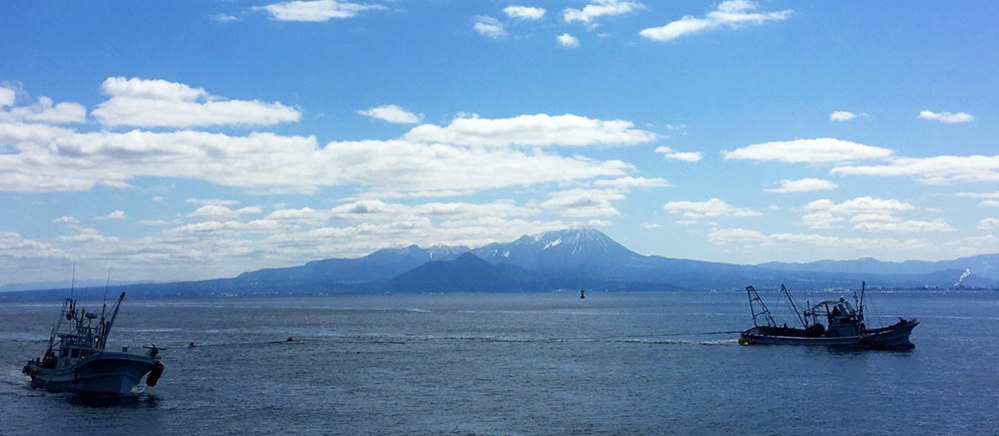
Ocean view of Mt. Daisen image 1
Mihokan enjoys a superb location, with Miho Bay and Mt. Daisen, the Chugoku region's highest peak at 1,709 meters, spread out right before you. From the panoramic onsen on the 7th floor of the New Wing, the views of Mt. Daisen across Miho Bay at dawn and dusk, and of the sea at night, are truly mystical.
Embraced by nature, watch ships pass in the distance and listen to the cries of the gulls. Spend timeless hours that only Mihonoseki can offer, as your thoughts drift to the good old days.

Cuisine Featuring Seasonal Local Fish

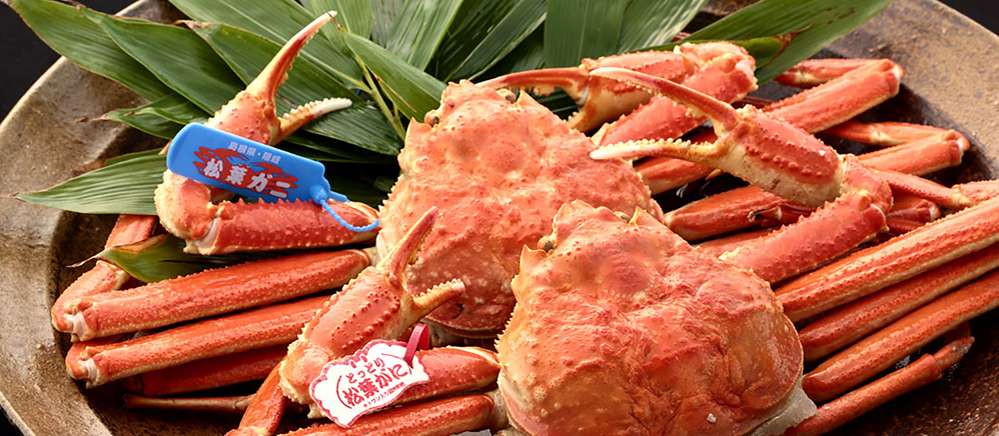
Cuisine image 1
Sakaiminato, just across the water from Mihonoseki, is a port town with one of the largest fish catches in Japan.
It is a treasure trove of seafood, including tuna, Matsuba snow crab, red snow crab, rock oysters, and white squid.
Every morning, our president and head chef go to the fish auction in Sakaiminato and the set-net fishery landing to source fresh ingredients. Savor the bounty of the Mihonoseki set nets, the Sea of Japan catch from Sakaiminato, and the flavors of the San'in coast.

Miho Shrine, Head Shrine of Ebisu

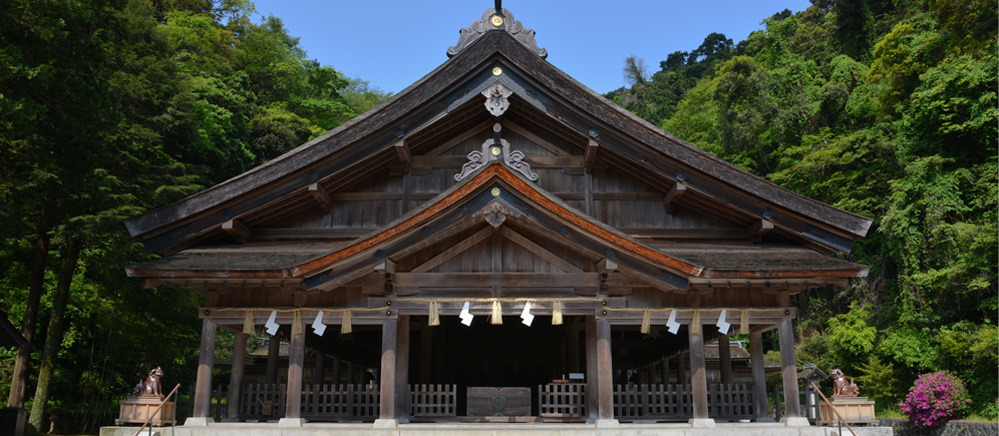
Miho Shrine image 1
Located just a 1-minute walk from Mihokan,Miho Shrineis an ancient shrine whose main hall is built in the hiyoku-taisha-zukuri style, an Important Cultural Property.
It is the head shrine of all Ebisu (Kotoshironushi) shrines nationwide; Ebisu is the eldest son of Okuninushi of Izumo Taisha. Since ancient times, it has drawn devotion for prosperous business, safety at sea, matchmaking, and more.
The deity is also known for loving music, and many valuable musical instruments have been dedicated to the shrine, including about 800 that are designated Important Tangible Folk Cultural Properties.
Mihotsuhime, consort of Okuninushi, is also enshrined here. As she is a deity of bountiful harvests, many people involved in agriculture also come to worship. (Doro-otoshi and Shiromite gatherings)
Weddings are also held at Miho Shrine, and these traditional Japanese ceremonies leave a lasting impression on the bride, groom, and guests alike.

A Base for Visiting Mizuki Shigeru Road

Mizuki Shigeru Road image 1
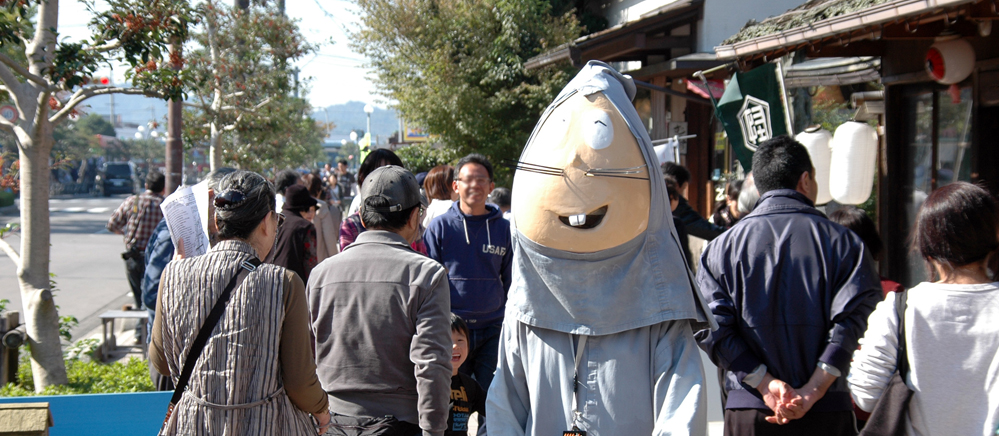
Mizuki Shigeru Road in Sakaiminato City has become one of Japan's leading tourist spots.
In the year NHK's morning drama "GeGeGe no Nyobo" aired, it drew 3.7 million visitors, making it one of Tottori Prefecture's most popular attractions.
Lined with 153 bronze yokai statues (as of August 2015), the street turns the whole town into a yokai theme park that adults and children alike can enjoy.
Mihokan is about a 20-minute drive from Mizuki Shigeru Road, making it an ideal base for sightseeing.
It is also about a 45-minute drive to Matsue Castle, designated a National Treasure in 2015, and about a 90-minute drive to Izumo Taisha, making it a great base for exploring the San'in region.

The Story of Mihokan

Discover our history dating back to the late Heian period, the people who have visited, and the events held in the Main Building.